

Flat roof vs. pitched roof: Pros and cons
Share this:
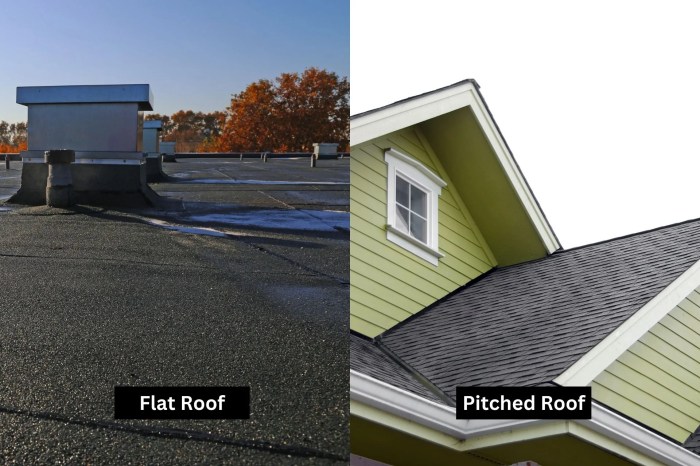
Starting off with Flat roof vs. pitched roof: Pros and cons, this initial paragraph aims to capture the attention of the readers, providing a brief yet intriguing glimpse into the topic at hand.
The following paragraph will delve deeper into the details and intricacies of flat roofs versus pitched roofs.
Flat Roof vs. Pitched Roof
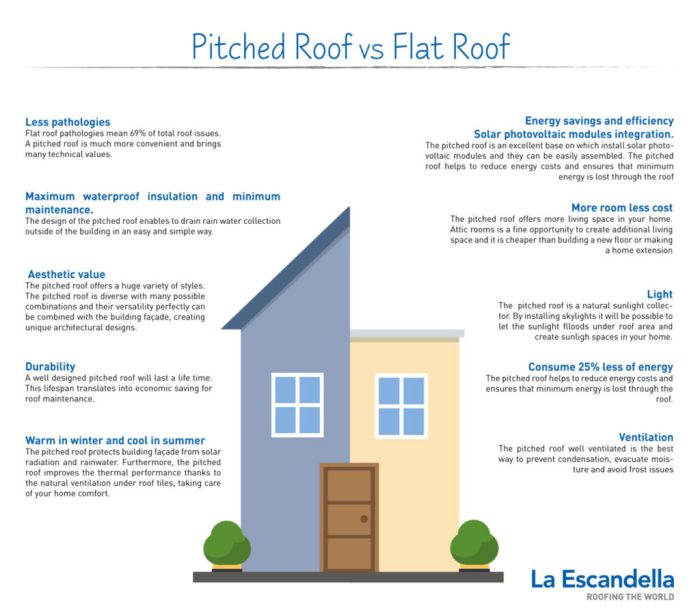
When it comes to roofing, two common types are flat roofs and pitched roofs. Each has its own set of characteristics and benefits that cater to different needs and preferences.
Characteristics of Flat Roofs
Flat roofs, as the name suggests, have a low or no slope. They are commonly found in commercial buildings and modern residential homes. These roofs are easier to access for maintenance and installation of solar panels or HVAC systems.
Characteristics of Pitched Roofs
Pitched roofs have a noticeable slope and are more traditional in style. They are commonly seen in residential homes and are known for their aesthetic appeal and efficient drainage system. Pitched roofs also provide better insulation and ventilation.
Primary Differences
- Flat roofs are easier and more cost-effective to install, while pitched roofs require more materials and labor.
- Pitched roofs offer better protection against harsh weather conditions, such as heavy rain and snow, compared to flat roofs.
- Flat roofs provide additional usable space for rooftop gardens or outdoor living areas, which is not feasible with pitched roofs.
- Maintenance for flat roofs is easier due to the accessibility, whereas pitched roofs may require more frequent inspections and repairs.
Flat Roof
Flat roofs have their own set of advantages and disadvantages that make them a popular choice for certain structures. Let's delve into the pros and cons of having a flat roof.
Advantages of Flat Roofs:
- Cost-effective: Flat roofs are generally more affordable to construct compared to pitched roofs due to their simpler design.
- Additional Space: The flat surface of a flat roof can be utilized for various purposes such as installing solar panels, creating a rooftop garden, or even setting up an outdoor recreational area.
- Easier Maintenance: Cleaning and inspecting a flat roof is easier and safer as compared to a pitched roof, making maintenance tasks more manageable.
Disadvantages of Flat Roofs:
- Drainage Issues: Flat roofs are more prone to water pooling and drainage problems, which can lead to leaks and structural damage if not addressed promptly.
- Less Insulation: Flat roofs tend to have poorer insulation properties compared to pitched roofs, resulting in higher energy consumption for heating and cooling.
- Shorter Lifespan: The materials used in flat roofs may have a shorter lifespan due to exposure to harsh weather conditions and UV radiation.
Examples of Suitable Structures for Flat Roofs:
Flat roofs are commonly used in commercial buildings, modern residential homes, industrial structures, and even some historical buildings. These structures benefit from the versatility and space utilization that flat roofs offer.
Pitched Roof
When it comes to pitched roofs, there are several advantages and disadvantages to consider. Pitched roofs have been a popular choice for many homeowners due to their aesthetic appeal and functionality. Let's delve into the pros and cons of having a pitched roof.
Benefits of Pitched Roof
- Enhanced Drainage: Pitched roofs have a sloped design that allows water to drain off easily, reducing the risk of leaks and water damage.
- Increased Attic Space: The steep slope of a pitched roof creates additional attic space which can be utilized for storage or living space.
- Improved Ventilation: Pitched roofs provide better ventilation, helping to regulate temperatures and prevent moisture buildup.
- Durability: Pitched roofs are known for their durability and ability to withstand harsh weather conditions such as heavy rain and snow.
Drawbacks of Pitched Roof
- Higher Cost: Pitched roofs typically require more materials and labor to install, making them more expensive compared to flat roofs.
- Maintenance: The sloped design of pitched roofs can make maintenance tasks such as cleaning gutters or repairing shingles more challenging and time-consuming.
- Limited Accessibility: The steep slope of a pitched roof can make it difficult to access for repairs or maintenance, requiring professional assistance.
Suitability for Different Climates
Pitched roofs are versatile and can be suitable for various climates. In regions with heavy rainfall or snowfall, the sloped design of a pitched roof helps prevent water accumulation and snow buildup, reducing the risk of structural damage. Additionally, pitched roofs provide better insulation, helping to regulate indoor temperatures in both hot and cold climates.
However, in areas prone to high winds or hurricanes, the pitch and shape of the roof may need to be carefully designed to withstand strong winds and prevent damage
Maintenance and Durability
When it comes to maintenance and durability, flat roofs and pitched roofs have their own set of considerations. Let's delve into the details to understand the differences between the two.
Maintenance Requirements
- Flat roofs require more frequent maintenance compared to pitched roofs. Debris, water pooling, and membrane damage are common issues that need to be addressed regularly.
- Pitched roofs, on the other hand, have a natural slope that allows water to run off easily, reducing the risk of water damage. Maintenance tasks are generally less frequent but may involve checking shingles, flashing, and gutters.
Durability Comparison
- Flat roofs are often considered less durable than pitched roofs due to the potential for water pooling, which can lead to leaks and structural damage over time.
- Pitched roofs are known for their longevity and durability. The slope helps prevent water damage, and materials like asphalt shingles or metal roofing are highly resistant to harsh weather conditions.
Common Issues and Solutions
- Flat roofs commonly face issues such as membrane damage, ponding water, and leaks. Regular inspections and prompt repairs can help prevent major problems.
- Pitched roofs may experience issues like missing shingles, damaged flashing, or clogged gutters. Periodic inspections and maintenance can address these issues before they escalate.
Cost Considerations
Installing and maintaining a roof comes with various cost considerations that can significantly impact your budget in the short and long term. Let's delve into the cost factors associated with both flat and pitched roofs to help you make an informed decision.
Cost Factors for Flat Roof
When it comes to installing a flat roof, the upfront cost is generally lower compared to a pitched roof. The materials used for flat roofs, such as EPDM or TPO, are typically less expensive than those used for pitched roofs.
However, the installation of a flat roof may require additional insulation and drainage systems to prevent water pooling, which can add to the overall cost.
Cost Factors for Pitched Roof
Pitched roofs, on the other hand, tend to be more expensive to install due to the complexity of the design and the materials required. Roofing materials for pitched roofs, such as asphalt shingles or metal, are generally pricier than those for flat roofs.
Additionally, the labor costs for installing a pitched roof are higher because of the skill and expertise needed to work on the slope.
Long-term Cost Implications
In terms of long-term cost implications, flat roofs may require more frequent maintenance and repairs due to their susceptibility to leaks and damage from standing water. This can result in higher maintenance costs over time. On the other hand, pitched roofs are more durable and have better water runoff, which can reduce the need for frequent repairs and maintenance.
While pitched roofs may have higher upfront costs, their longevity and lower maintenance requirements can make them a cost-effective choice in the long run.
Design and Aesthetics
When it comes to the design and aesthetics of a building, the choice between a flat roof and a pitched roof can greatly impact the overall look and feel of the structure.
Influence of Flat Roof Design
A flat roof design can give a modern and minimalist look to a building. It often creates clean lines and a sleek appearance, which can be appealing in contemporary architecture. Additionally, flat roofs can provide extra space for rooftop gardens, solar panels, or outdoor living areas, adding to the overall aesthetic appeal.
Impact of Pitched Roof Design
On the other hand, a pitched roof design is more traditional and can add a sense of charm and character to a structure. The slope of a pitched roof can also impact the architectural style of a building, with steeper pitches often associated with specific styles like Victorian or Tudor architecture.
Trends in Modern Architecture
In modern architecture, there is a trend towards incorporating both flat and pitched roofs in the same building to create a unique and dynamic look. This blend of styles allows for the benefits of both types of roofs while adding visual interest and complexity to the overall design.
Final Thoughts
Concluding our discussion on Flat roof vs. pitched roof: Pros and cons, this final paragraph will wrap up the key points and leave readers with a lasting impression of the comparison.
General Inquiries
What are the main benefits of having a flat roof?
Flat roofs provide a modern aesthetic, easier installation of solar panels, and extra outdoor space for recreational activities.
What are the drawbacks of a pitched roof?
Pitched roofs may require more maintenance, have limited space for storage, and can be challenging to access for repairs.
Are pitched roofs better for certain climates?
Pitched roofs are more suitable for areas with heavy rainfall or snowfall as they allow for better water drainage and snow shedding.